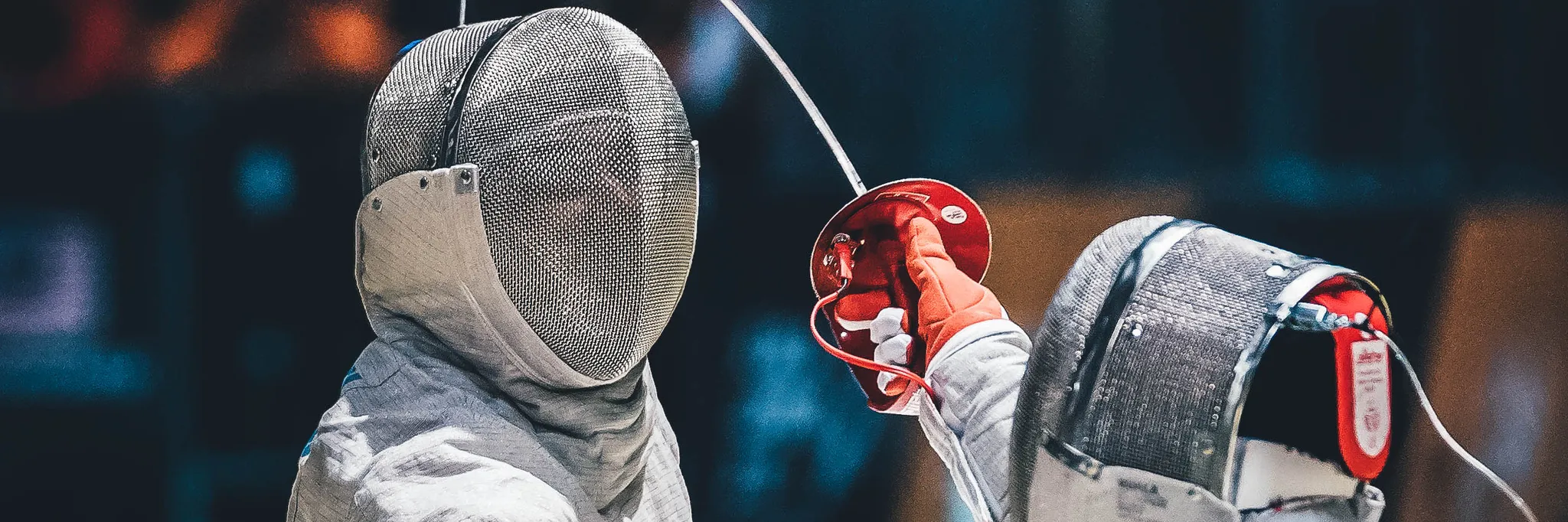
Every session consist of a group training which starts at 6:30pm and last 1.5 hour. Please arrive 5 minutes before scheduled class starts.
Group training includes exercises to help develop flexibility, strength and cardio-vascular conditioning. Also covers fencing specific training which consists of group games, footwork, partner drills and bouts.
After group trainings fencers can take private lessons (for additional fee) and/or participate in open fencing (usually in form of bouts with electrical equipment) until conclusion of training session.
School Holidays We usually train during school holidays. Also special training camps, referee and coaching clinics are organised occasionally during school holidays.
How Often should Fencer Practice?It is expected that fencers will train twice a week as a minimum. Twice weekly training is all about motivation, quality, relationships and effective educational experience. A person training once a week or occasionally is not only progressing painfully slowly but is likely to be deflated. He or she also holds up the group and coaches as requiring extra attention, explanation and time.
We ask that fencer attends at least 80% of sessions (missing no more than 1 in 4 classes). More advanced fencers wanting to achieved good results at competitions should train at least three times per week. For fencers wanting to practice more, additional classes (including private tuition) could be arranged.
It is important to remember that fencers interested in improving their fencing performance and competitiveness can benefit greatly from additional conditioning exercises outside fencing class. This should by no means replace the regular club trainings, bouting, drilling, footwork, lessons, etc. that the fencer normally does.
Also for a good health it is recommended that children and young people should be physically active every day for at least 60 minutes (and up to several hours), combining moderate and vigorous activity. Fencing trainings will provide this for you.
What to wear? Participants need to wear comfortable clothes that are suitable for general sport activities and allow complete freedom of movement.
Be sure that you wear shoes appropriate for sporting use with good grip and non-marking soles. Shoes should be clean to avoid dust and moisture build up which could make the floor slippery. Shoes for indoor training shouldn’t be used outside, particularly during a bad whether.
Fencing Gear Members are expected to provide their own equipment. A very limited number of sets are available for new fencers to try out the sport. The Club can assist in purchasing fencing equipment.